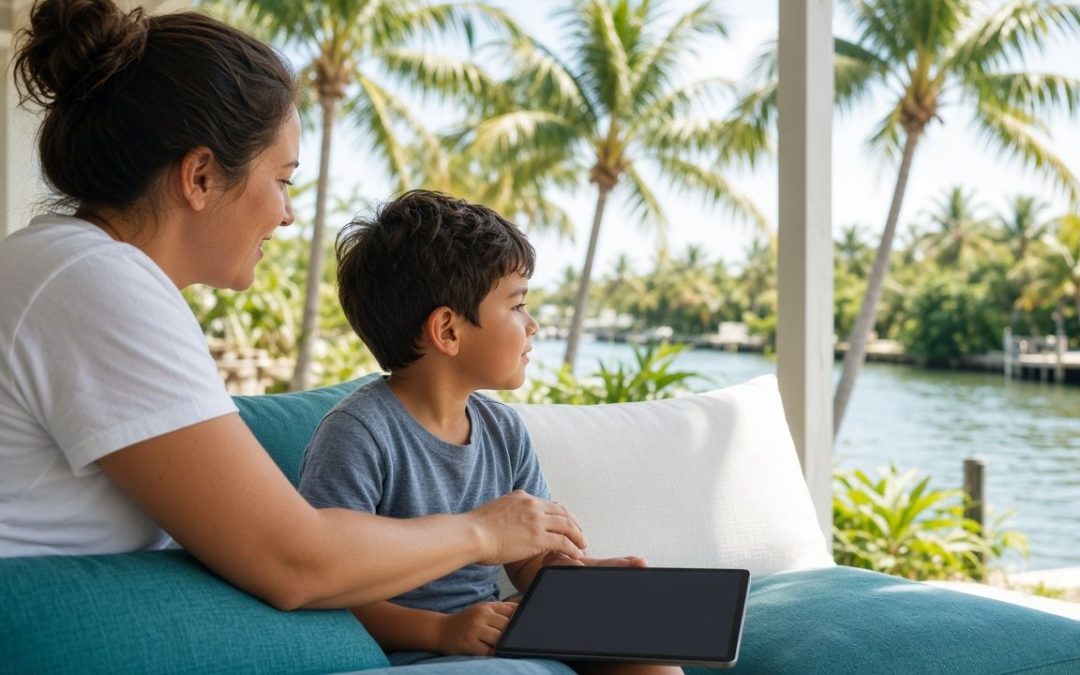
Between school laptops, homework apps, video games and family video calls, most kids in Port St. Lucie spend a big part of every day looking at a screen. Parents from Tradition to Sandpiper Bay often ask us the same question: is all of this hurting my child’s eyes? The short answer is reassuring. According to the American Academy of Ophthalmology, there is no evidence that screens cause permanent damage to children’s eyes. Still, long sessions of close-up viewing can leave kids with tired, uncomfortable eyes, and a lifestyle heavy on near work and light on outdoor play is linked to nearsightedness. Here is how to keep screen habits eye-friendly at home.
Why Long Screen Sessions Feel Hard on Young Eyes
Looking at anything up close asks the eyes to do two jobs at once: focus at a short distance and turn slightly inward so both eyes stay lined up on the same spot. Children are very good at this, which is exactly why they can stare at a game for an hour without noticing that their eyes are working hard. Concentration also lowers the blink rate, so the surface of the eye dries out faster than usual.
The result is often called digital eye strain. Watch for:
- Rubbing the eyes or complaining that they burn, itch or feel tired
- Headaches that show up after school or in the evening
- Squinting, or holding a tablet or phone very close to the face
- Blurry vision for a moment after looking up from a device
- Losing their place while reading, or avoiding homework that involves a lot of reading
These symptoms usually fade once your child takes a break. When they keep returning, it may mean there is an uncorrected prescription or a problem with focusing or eye teaming, and that deserves a closer look.
Screens, Near Work and Nearsightedness
Myopia, or nearsightedness, has become much more common in children over the past few decades. Researchers believe the causes include genetics, lots of close-up activity and, importantly, too little time outdoors. Screens are not the only form of near work, since reading and crafts count too, but devices make it easy for kids to spend hours focused at arm’s length or closer.
Studies have found that time spent outside, in natural daylight and looking at things far away, is associated with a lower chance of developing myopia. That is good news for Port St. Lucie families, because our weather makes outdoor play possible almost all year. If your child is already nearsighted, there are treatments that may help slow how quickly it progresses. You can learn more on our myopia control page, and we offer a free virtual myopia consultation for parents who want to talk through the options.
What About Blue Light?
Blue light gets a lot of attention, but current evidence does not show that the blue light from phones, tablets or computers harms children’s eyes. The American Academy of Ophthalmology does not recommend blue light glasses for eye health. Where blue light may matter is sleep: bright screens late in the evening can make it harder for kids to wind down. Turning devices off an hour or so before bed is a simple habit that helps both sleep and tired eyes.
Easy Habits That Help
You do not need to ban screens to protect your child’s eyes. A few small changes go a long way:
- Use the 20-20-20 rule. Every 20 minutes, look at something about 20 feet away for at least 20 seconds. A kitchen timer or a device reminder makes this easier for younger kids.
- Keep devices at a comfortable distance. Tablets and laptops should sit around arm’s length away, a little below eye level, rather than right up against the nose.
- Remind them to blink. Blinking keeps the eyes moist. A break to get a drink of water or stretch is a natural way to reset.
- Get the lighting right. Avoid using a bright screen in a dark room, and reduce glare from windows or overhead lights.
- Plan outdoor time every day. A walk around the neighborhood, a trip to the park in St. Lucie West or time in the backyard all count. Sunglasses and a hat are smart in the Florida sun.
- Set screen-free times. Meals, car rides and the hour before bed are good places to start.
When to Schedule an Eye Exam
Many vision problems do not cause obvious symptoms, and children rarely know that what they see is not normal. A school or pediatrician screening is helpful, but it is not a full exam. A pediatric eye exam checks prescription, focusing, eye teaming and overall eye health. Book a visit sooner if your child has frequent headaches, eye rubbing, squinting, sits very close to screens or the TV, or has trouble keeping up with reading.
St. Lucie Family Eye Care also offers a free kids vision screening for ages 5 to 17, a quick way to check whether a full exam is a good next step.
Frequently Asked Questions
Can screen time permanently damage my child’s eyes?
Current evidence does not show permanent damage from screens. Long sessions can cause temporary strain and dryness, and lots of near work with little outdoor time is linked to nearsightedness.
Does my child need blue light glasses?
Blue light glasses are not recommended for eye health. Regular breaks, good device distance and limiting screens before bed are more helpful.
How much screen time is too much?
There is no single number that fits every child. Follow your pediatrician’s guidance on total screen time, build in regular breaks, and make sure outdoor play is part of every day.
How often should kids have an eye exam?
The American Optometric Association recommends a comprehensive eye exam every year for school-age children, and sooner if you notice symptoms.
Schedule Your Child’s Eye Exam in Port St. Lucie
Whether your family lives in Tradition, Torino, Tesoro, Sandpiper Bay or St. Lucie West, St. Lucie Family Eye Care at 702 SW Port St Lucie Blvd is here to help your kids see comfortably at school, at play and on screens. Call (772) 873-0037 or request an appointment online.